A generation ago, women who delayed having children while building a career or waiting for the right partner had no way to pause their biological clock. Today, that option exists — and it is more accessible, more effective, and more commonly chosen than most people realise.
Egg freezing in Ahmedabad — medically known as oocyte cryopreservation — is a fertility preservation technique in which a woman’s eggs are retrieved, frozen, and stored for future use. When she is ready to conceive, the eggs are thawed, fertilised with sperm, and transferred as embryos.
At Lifeline Women Hospital & IVF Centre, Gota, our IVF team provides comprehensive egg freezing services for women who are not ready for pregnancy now but want to protect their fertility for the future. This guide answers the most important questions women ask about this empowering option.
Who Should Consider Egg Freezing?
Egg freezing is not only for women delaying pregnancy by choice. There are several distinct groups for whom fertility preservation is medically or personally important:
Career and Life-Stage Women (Social Egg Freezing)
Women in their late 20s and early 30s who are not yet ready for pregnancy — due to career priorities, relationship status, or personal choice — are the largest and fastest-growing group seeking egg freezing. Egg quality declines with age; freezing eggs at 28–32 preserves that quality for use at 35, 38, or 40.
Why 35 matters: After 35, egg quality and quantity decline more rapidly. A woman who freezes eggs at 30 and uses them at 38 uses 30-year-old eggs — not 38-year-old eggs. This is the central clinical value of elective egg freezing.
Cancer Patients Before Chemotherapy or Radiation (Medical Egg Freezing)
Chemotherapy and pelvic radiation damage ovarian reserve — sometimes irreversibly. Women diagnosed with cancer before completing their family should be referred urgently to a fertility specialist before starting treatment, as egg or embryo freezing can often be completed within 10–14 days.
At Lifeline IVF, we offer expedited fertility preservation cycles for oncology patients — coordinating closely with treating oncologists to minimise any delay to cancer treatment.
Women with Diminished Ovarian Reserve
Some women experience early ovarian ageing — characterised by low AMH and high FSH, often without symptoms. Egg freezing now, before the reserve declines further, preserves whatever egg quality currently exists.
Women with Endometriosis or PCOS
Endometriosis can damage ovarian tissue and reduce ovarian reserve over time. Women with endometriosis who are not yet trying to conceive may benefit from egg freezing before further surgery or disease progression reduces their options.
Women Undergoing Fertility Treatment Who Are Not Ready for Embryo Transfer
Some women in IVF cycles prefer to freeze eggs rather than create embryos — for personal, religious, or relationship reasons. Egg freezing preserves reproductive autonomy.
The Egg Freezing Process at Lifeline IVF: Step by Step
The egg freezing procedure is the same as the egg retrieval phase of a standard IVF cycle — the only difference is that retrieved eggs are frozen rather than immediately fertilised.
Step 1 — Ovarian Reserve Assessment
A baseline evaluation including:
- AMH (Anti-Müllerian Hormone) — the single best predictor of ovarian reserve
- Antral Follicle Count (AFC) — transvaginal ultrasound count of small follicles at baseline
- FSH and E2 on Day 2–3 of the menstrual cycle
This assessment determines how many eggs are likely to be retrieved and whether the response to stimulation will be adequate. For tips on optimising egg quality before retrieval: How to Improve Egg Quality for IVF Success in Ahmedabad
Step 2 — Ovarian Stimulation (10–14 Days)
Daily injections of gonadotrophins (FSH-containing medications) stimulate the ovaries to produce multiple follicles simultaneously — rather than the single egg that develops in a natural cycle. Monitoring ultrasounds and blood tests every 2–3 days track follicle growth and estrogen levels.
For natural tips to support your eggs during this period: Preparing for IVF — Improve Your Egg Quality with These Natural Tips
Step 3 — Trigger Injection
When the leading follicles reach 17–18 mm, a trigger injection (hCG or GnRH agonist) is given — precisely timed to mature the eggs for retrieval 36 hours later.
Step 4 — Egg Retrieval
Performed under short general anaesthesia or deep sedation. A fine needle is passed through the vaginal wall under ultrasound guidance — aspirating fluid from each follicle. The procedure takes 15–20 minutes. Most women go home 1–2 hours later.
For the complete retrieval guide: IVF Egg Retrieval — Timeline and What to Expect
Step 5 — Vitrification (Flash Freezing)
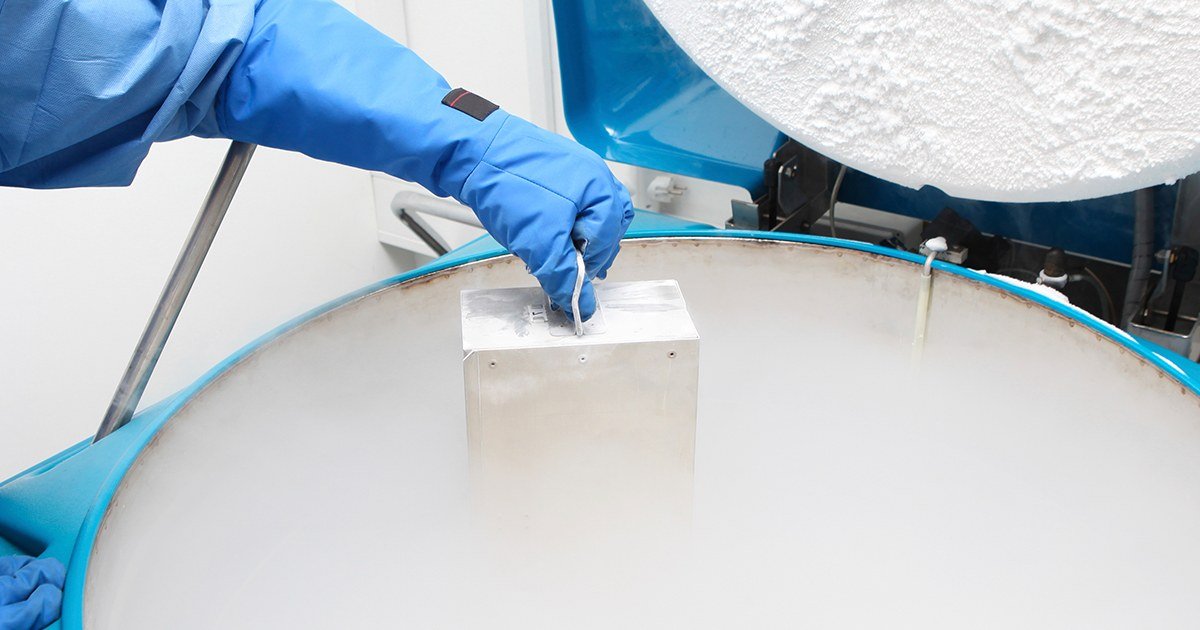
Retrieved mature eggs are immediately assessed by the embryologist. Mature (MII) eggs undergo vitrification — an ultra-rapid freezing technique that replaces the cellular water with cryoprotectants and flash-freezes the egg in liquid nitrogen. This prevents ice crystal formation that damaged eggs in older slow-freeze techniques.
Survival rates for vitrified eggs at leading IVF centres now exceed 90%.
Step 6 — Cryostorage
Frozen eggs are stored in liquid nitrogen at -196°C. Eggs can remain in cryostorage indefinitely without quality degradation. Annual storage fees apply.
How Many Eggs Should You Freeze?
This is the most practical question, and the answer depends on your age and intended family size:
| Age at Freezing | Eggs Needed for 80% Cumulative Pregnancy Chance (1 child) |
| Under 35 | 10–15 mature eggs |
| 35–37 | 15–20 mature eggs |
| 38–40 | 20–30 mature eggs |
| Over 40 | 30+ mature eggs (success rates decline significantly) |
Because each retrieval cycle typically yields 8–15 eggs (age-dependent), some women complete two cycles to reach their target number. A pre-cycle consultation with the best IVF doctor in Ahmedabad will give you a personalised estimate based on your AMH and AFC.
Using Frozen Eggs When You’re Ready
When you decide to use your frozen eggs:
- Eggs are thawed and assessed for survival
- Surviving eggs are fertilised by ICSI — a single sperm is injected into each egg
- Fertilised eggs are cultured to Day 3 or Day 5 (blastocyst)
- One or two embryos are transferred to your uterus in a prepared cycle
- Remaining good-quality embryos are frozen as embryos for future transfers
Pregnancy rates from frozen eggs are now comparable to fresh IVF cycles in women under 36 at the time of freezing — one of the most important advances in reproductive medicine of the past decade.
Conclusion: Egg Freezing in Ahmedabad — Protect Your Options While You Still Have Them
The biology of female fertility is uncompromising — egg quality and quantity decline with age, regardless of lifestyle, fitness, or health. Egg freezing in Ahmedabad at Lifeline IVF gives women the ability to separate the timing of fertility from the timing of motherhood — and for oncology patients, it may be the only path to biological parenthood after treatment.
If you are considering your options — whether for personal, career, or medical reasons — the best time to consult a fertility specialist is before you urgently need to. The earlier the eggs are frozen, the better their quality and the higher the eventual success rates.
Book Your Egg Freezing Consultation at Lifeline IVF
Find out how many eggs you currently have and whether now is the right time to preserve them.