
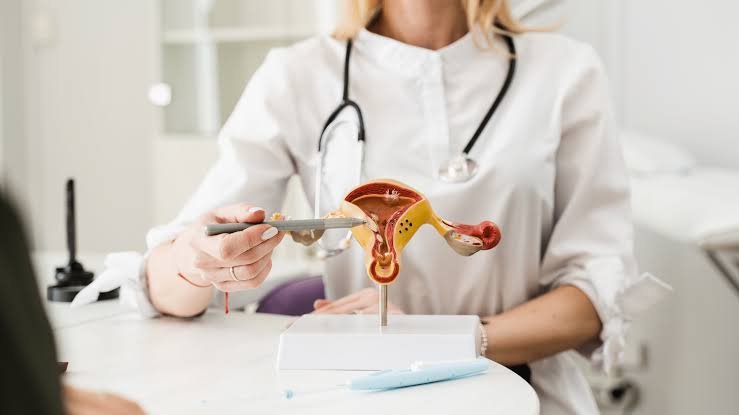
Painful periods are often dismissed as normal. But for many women, severe period pain is a sign of endometriosis — a condition that affects about 1 in 10 women of reproductive age and is one of the most common causes of difficulty getting pregnant. The good news: most women with endometriosis can still have a baby with the right treatment. Our team, led by Dr. Maulik Shah, treats endometriosis with laparoscopic endometriosis surgery and fertility care under one roof, alongside gynaecology care in Ahmedabad.
What Is Endometriosis?
Endometriosis is when tissue similar to the lining of the womb grows outside the womb — on the ovaries, fallopian tubes, the outer surface of the uterus or other pelvic organs. This tissue reacts to monthly hormones, causing inflammation, pain and scar tissue (adhesions). When it forms cysts on the ovary, they are called endometriomas or “chocolate cysts”.
According to the World Health Organization, endometriosis affects roughly 10% of reproductive-age women worldwide, about 190 million people, and diagnosis is often delayed by 4 to 12 years.
Common Symptoms
- Severe period pain that painkillers do not control
- Pain during or after intercourse
- Long-standing pelvic or lower-back pain, even outside periods
- Heavy periods
- Pain while passing urine or stools during periods
- Bloating, nausea and tiredness
- Difficulty getting pregnant
Some women have no pain at all and discover endometriosis only during fertility tests.
How Does Endometriosis Affect Fertility?
Among women with infertility, as many as 25–50% have endometriosis (WHO). It can reduce fertility in several ways:
- Blocked or damaged tubes — adhesions can stop the egg and sperm from meeting
- Distorted pelvic anatomy — the ovary and tube may be stuck down
- Lower egg reserve — chocolate cysts, and surgery on them, can reduce AMH (see low AMH)
- Inflammation in the pelvis that can affect egg quality, sperm and implantation
Stages of Endometriosis
Doctors often describe endometriosis in four stages, based on what is seen at laparoscopy. The stage does not always match how much pain you feel — some women with mild disease have severe pain, and some with severe disease have little.
| Stage | What it usually means |
| Stage I – Minimal | A few small, superficial spots; no significant scarring |
| Stage II – Mild | More spots, slightly deeper; little or no scarring |
| Stage III – Moderate | Deeper disease, small cysts on one or both ovaries, some adhesions |
| Stage IV – Severe | Large chocolate cysts and dense adhesions; tubes or bowel may be stuck |
Endometriosis or Adenomyosis?
Adenomyosis is a related condition in which womb-lining tissue grows into the muscle wall of the uterus. It also causes heavy, painful periods and can affect fertility. The two often occur together, and an ultrasound or MRI helps tell them apart.
How Is Endometriosis Diagnosed?
- History and examination — your symptoms and a pelvic check.
- Transvaginal ultrasound — shows chocolate cysts and some deep disease.
- MRI — in selected cases to map deep endometriosis.
- Laparoscopy — a key-hole camera look inside the pelvis; it confirms the diagnosis and allows treatment at the same time. Read about hystero-laparoscopy.
Fertility work-up also includes AMH, a tubal test and a semen analysis for your partner.
Can You Get Pregnant with Endometriosis?
Yes. Many women with mild endometriosis conceive naturally. Your chances depend on your age, the stage of endometriosis, whether the tubes are open, your egg reserve and your partner’s sperm. Doctors often use these factors together to decide between trying naturally, surgery, IUI or IVF.
Treatment Options When You Want a Baby
| Situation | Usual first step |
| Mild disease, young, tubes open | Try naturally for a limited time, or ovulation induction with IUI |
| Pain plus infertility, or large cysts | Laparoscopic surgery to remove disease, then try to conceive |
| Blocked tubes, older age, low AMH or failed IUI | IVF |
| Previous surgery with low egg reserve | IVF without further ovarian surgery |
Laparoscopic surgery
Key-hole surgery removes endometriosis spots, adhesions and cysts, which can relieve pain and improve natural fertility in suitable women. Surgery on the ovary is done carefully to protect healthy egg tissue. See laparoscopic ovarian cystectomy.
Ovulation induction and IUI
For mild endometriosis with open tubes, a few cycles of ovulation tablets or injections with IUI can help.
IVF
IVF bypasses blocked tubes and the inflamed pelvis, and is often the most effective option when endometriosis is moderate or severe, age is higher or egg reserve is low. Learn more at our IVF centre in Ahmedabad.
Freezing eggs before surgery
If you need ovarian surgery and are not ready for pregnancy, ask about freezing your eggs first.
Medicines: What They Can and Cannot Do
Hormonal medicines such as progestins or combined pills control pain well, but they stop ovulation, so they are not used while you are trying to conceive. They are useful after surgery or between treatment cycles to keep symptoms down.
Living with Endometriosis
Endometriosis is a long-term condition, but it can be managed. Regular exercise, a balanced diet, heat therapy for pain and support from your doctor all help. Do not ignore severe period pain — earlier diagnosis protects fertility.
Endometriosis in Young Women
Endometriosis often starts in the teenage years. A girl who regularly misses school or college because of period pain, or whose pain does not settle with ordinary painkillers, deserves a proper check-up. Early diagnosis and treatment can control pain and help protect future fertility.
Lifestyle Steps That May Ease Symptoms
- Regular exercise such as walking, yoga or swimming
- A balanced diet rich in vegetables, fruit, whole grains and omega-3 fats (fish, flaxseed, walnuts)
- Limiting alcohol and very processed foods
- Heat packs and gentle stretching during painful days
- Good sleep and stress management
These steps do not cure endometriosis, but many women find they help alongside medical treatment.
Questions to Ask Your Doctor
- What stage of endometriosis do I likely have, and are my tubes open?
- What is my AMH, and how would surgery affect it?
- Should I try naturally first, have surgery, or go straight to IVF?
- How long should I try before moving to the next step?
- Which pain treatments are safe while I am trying to conceive?
| Painful periods or trouble conceiving? Meet Dr. Maulik Shah at Lifeline Women’s Hospital, Gota, for an endometriosis and fertility check. Call +91 98988 66044 or book online. |
Frequently Asked Questions
Can I get pregnant naturally with endometriosis?
Yes, many women with mild endometriosis do. If you have tried for 6–12 months without success, see a specialist.
Does endometriosis surgery improve fertility?
In suitable women, removing endometriosis and adhesions can improve natural pregnancy chances and relieve pain. Ovarian surgery must be done carefully to protect egg reserve.
Is IVF successful with endometriosis?
Yes. IVF is an effective option, especially with moderate or severe disease, blocked tubes or low AMH.
What is a chocolate cyst?
It is an endometriosis cyst on the ovary filled with old, dark blood. Not every chocolate cyst needs surgery; your doctor will advise based on size, symptoms and fertility plans.
Does pregnancy cure endometriosis?
Symptoms often improve during pregnancy, but endometriosis usually does not go away permanently.
Can endometriosis come back after surgery?
Yes, it can recur. That is why timing surgery around your pregnancy plans matters.
Author & Medical Review
Dr. Maulik Shah MBBS, MS (Obstetrics & Gynaecology) — Diploma in Infertility (Germany) | Consultant Gynaec & Infertility Specialist. Medically reviewed by Dr. Maulik Shah.


