When patients search for the best IVF centre in Ahmedabad, they typically focus on the doctor — the specialist’s qualifications, experience, and bedside manner. These matter enormously. But the single most important factor that distinguishes the best IVF centre in Ahmedabad from an average one is something most patients never see: the embryology laboratory.
The IVF laboratory is where your eggs are fertilised, where your embryos develop from day 1 through day 5 or 6, where they are evaluated for quality, and where they are either transferred back to the uterus or cryopreserved for future use. The quality of this environment — its air quality, its temperature stability, its CO₂ concentration, its culture media, its equipment, and the skill of the embryologists working within it — determines whether embryos develop normally and whether they survive to become pregnancies.
At Lifeline Women Hospital & IVF Centre, Gota, Ahmedabad the IVF laboratory operates to the highest quality standards — because our team understands that your embryos are irreplaceable, and every decision about the laboratory environment is a decision about your chance of parenthood.
What Makes an IVF Laboratory World-Class
Air Quality — The Foundation of a Good Embryology Lab
Human embryos are extraordinarily sensitive to volatile organic compounds (VOCs), airborne particles, and endocrine-disrupting chemicals. In standard hospital environments, these compounds exist at levels that do not harm adults but measurably impair embryo development.
The best IVF centre in Ahmedabad controls laboratory air quality using:
- HEPA filtration — removing particles greater than 0.3 microns
- Activated carbon filtration — removing VOCs from adhesives, cleaning products, solvents, and building materials
- Positive pressure — maintaining the laboratory at slightly higher pressure than surrounding areas, preventing contaminated air from entering
- Air change rate — the laboratory air is completely exchanged multiple times per hour
The clinical consequence of inadequate air quality: reduced fertilisation rates, impaired embryo development, lower blastocyst conversion rates, and reduced implantation after transfer.
CO₂ Incubators — The Embryo’s Temporary Home
Between egg retrieval and embryo transfer, developing embryos live in CO₂ incubators — sealed chambers maintaining temperature at 37°C, CO₂ concentration at 5–6%, and humidity close to 100%. Any fluctuation in any of these parameters disrupts the embryo’s developmental environment.
Benchtop incubators with minimal opening frequency are the current standard — small chambers designed to minimise gas and temperature recovery time after each brief opening. Large-capacity traditional incubators that are opened frequently take longer to return to optimal conditions, creating repeated micro-stress on developing embryos.
Culture Media — The Food That Feeds Your Embryos
Embryo culture media contain the nutrients, amino acids, growth factors, and energy substrates that support embryo development from fertilised egg (day 0) through cleavage stage (day 3) to blastocyst (day 5–6). Different commercial media formulations produce different outcomes in published comparative studies.
The best IVF centre in Ahmedabad uses validated, CE-marked culture media from established manufacturers — avoiding non-validated in-house formulations. Media are stored correctly (temperature, light exposure, expiry date management) and prepared fresh for each treatment cycle.
Time-Lapse Monitoring — Watching Embryos Develop Without Disturbing Them
Traditional embryo assessment requires removing embryos from the incubator once or twice daily to examine them under a microscope — creating brief but repeated environmental disruption. Time-lapse incubation systems (EmbryoScope, Primo Vision, MIRI TL) incorporate cameras inside the incubator, capturing images every 10–20 minutes throughout development without any incubator opening.
Time-lapse technology allows:
- Continuous developmental monitoring without environmental disturbance
- Documentation of developmental events at precise timing (fertilisation, cleavage, compaction, blastulation)
- Identification of morphokinetic markers associated with higher implantation potential
- Embryo selection based on developmental timeline, not just static morphology
ICSI — Intracytoplasmic Sperm Injection
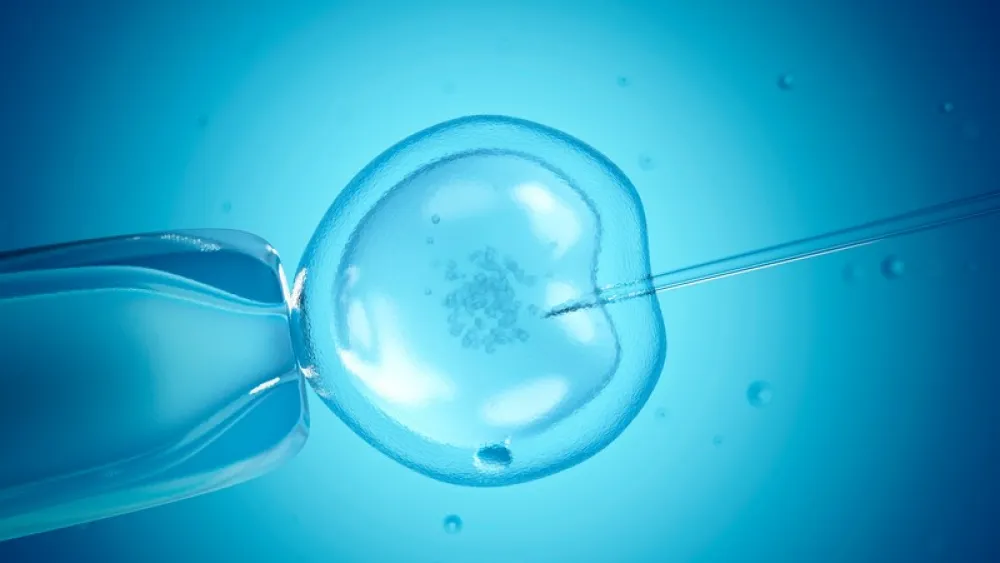
ICSI is now performed in the majority of IVF cycles worldwide — for male factor infertility, poor fertilisation in previous conventional IVF, low oocyte count, and unexplained infertility. A single motile sperm is identified under high magnification, selected, and injected directly into the mature egg using a micromanipulation system.
ICSI quality depends on:
- Micromanipulation equipment quality — the inverted microscope, micromanipulators, and micropipettes must be correctly calibrated and maintained
- Embryologist skill — ICSI is one of the most technically demanding laboratory procedures; consistent technique determines consistent fertilisation rates
- Sperm selection — standard ICSI selects morphologically normal-appearing sperm; advanced techniques (IMSI — intracytoplasmic morphologically selected sperm injection) use higher magnification to select sperm with normal vacuole profiles
At Lifeline Women Hospital & IVF Centre, ICSI is performed by senior embryologists on all cycles where male factor is identified — producing consistently reliable fertilisation rates.
For why ICSI and other IVF procedures may be preferable to other treatments: Advantages of IVF Versus Other Fertility Treatments
Blastocyst Culture and Transfer — Why Day 5 Matters
The standard in modern IVF is blastocyst transfer — culturing embryos to day 5 or 6 rather than transferring at day 3. The advantages are substantial:
Self-selection of viable embryos: Only approximately 40–50% of day 3 embryos reach blastocyst stage — the developmental checkpoint at which chromosomally abnormal embryos typically arrest. Blastocyst transfer therefore selects embryos that have passed this natural selection threshold.
Better synchrony with the endometrium: A blastocyst reaches the uterine cavity naturally on day 5–6 in a natural conception. Transferring a day 3 embryo introduces it to an environment that is not yet optimally receptive.
Higher implantation rate per transfer: Blastocysts implant at significantly higher rates than cleavage-stage embryos — meaning fewer embryos transferred are needed to achieve pregnancy, supporting elective single embryo transfer (eSET) to reduce twin risk.
Understanding IVF Success Rates: What You Should Ask
The most important question to ask any best IVF centre in Ahmedabad is not “What is your success rate?” — it is “What is your live birth rate per transfer, broken down by patient age group?”
This distinction matters:
- Positive pregnancy test rate: Measures biochemical pregnancies — includes early miscarriages
- Clinical pregnancy rate: Foetal heartbeat on scan — excludes early losses
- Live birth rate: A baby born at term — the only outcome that actually matters to patients
Published national benchmarks (from the Indian Council of Medical Research and international registries) suggest average live birth rates of:
- Under 35: 40–50% per fresh blastocyst transfer
- 35–37: 35–42%
- 38–40: 22–30%
- Over 40: 10–18% (own eggs)
For factors that determine IVF success: Important Factors When Deciding on the Best IVF Doctor in Ahmedabad For navigating IVF after a failed cycle: IVF Failure — Next Steps with the Best IVF Doctor in Ahmedabad
Conclusion: The Best IVF Centre in Ahmedabad Invests in What You Cannot See
The waiting room decor and the doctor’s friendliness are visible. The culture media formulation, the incubator CO₂ recovery time, and the embryologist’s micromanipulation technique are not — but these invisible factors determine your IVF outcome more than almost anything else.
The best IVF centre in Ahmedabad invests in its laboratory, its embryologists, and its quality systems because it understands that every embryo is irreplaceable. At Lifeline Women Hospital & IVF Centre, that investment is the foundation of everything we do — guided by the best gynaecologist in Ahmedabad and IVF team, supported by laboratory standards you can rely on.
Book Your IVF Consultation at Lifeline Women Hospital
Start with an honest assessment of your individual fertility profile — before any treatment commitment.