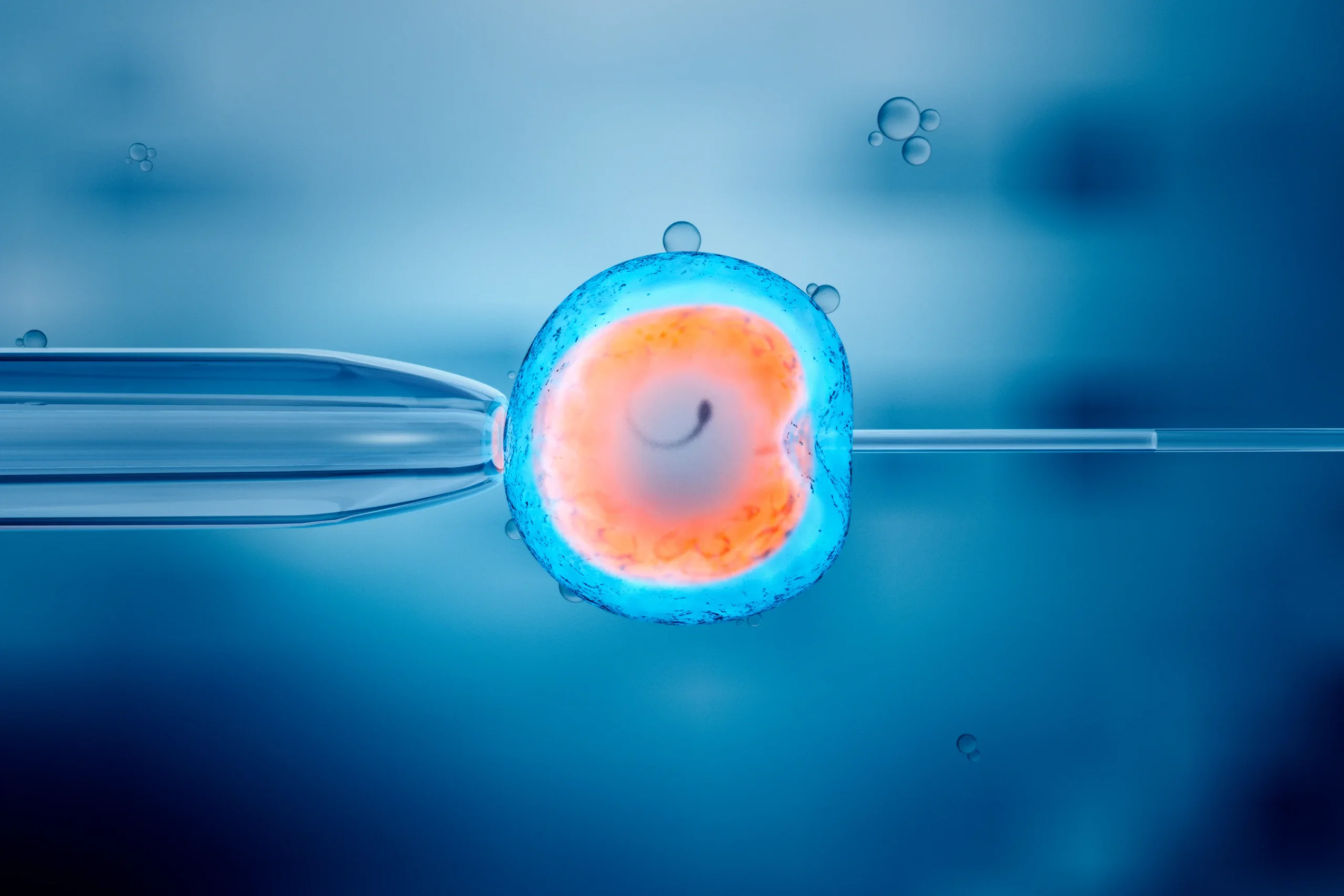
IVF is one of the most well-known and widely employed fertility treatments. There are numerous options available for couples facing the challenge of infertility. In-vitro fertilization (IVF) can be considered a viable choice for many couples. What makes IVF distinct from other options like IUI or alternative medications?
This blog highlights the benefits of IVF and will help the couples make an informed decision regarding the method that is most suitable for their specific needs.
What Is IVF?
IVF is a treatment for couples suffering from infertility. This is a method that causes the ovaries to produce many eggs. They are then fertilised in the outside of the body (in the lab). ).>> Once fertilization is completed and an embryo has been made, the embryo is transferred into the uterus for implantation in the uterus, where it will grow to become a baby.
IVF is commonly used in cases where other fertility treatments fail or there exist particular fertility problems such as male infertility or when the fallopian tube is closed. It provides the highest level of control and precision on the fertilization process and has led to it being one of the most efficient options for treating fertility currently.
At the best IVF centre in Ahmedabad, advanced technology and experienced fertility specialists work together to provide personalized care and improve your chances of achieving a successful pregnancy.
IVF vs. Other fertility treatments
If you’re considering the possibility of fertility treatments, IVF is frequently compared with alternatives including IUI and fertility medications and surgical procedures. This is a brief overview to inform you about the situations in which IVF could be the ideal choice.
IVF vs. IUI (Intrauterine Insemination)
- IUI is the procedure of inserting an uterus containing sperm during the moment of Ovulation. It is typically recommended to women who have moderate difficulty in conceiving.
- It requires fertilizing eggs outside of the body. The procedure is generally used in situations that require more effort, like men with severe infertility, or for the fallopian tube becoming blocked.
- IUI isn’t as extensive and has a lower cost of operation However, it does not have a high rate of success when compared to IVF especially for females with serious fertility problems.
IVF Vs. Fertility Medications
- Fertility medicines increase Ovulation. They can be used along with IUI to boost the chance of having a baby.
- IVF gives more control over fertilization and choice of embryos. This could be advantageous for those who are suffering from severe issues in fertility.
- IVF can be better when women have not had an excellent reaction to fertility medications alone.
IVF Vs. Surgery
- The surgical procedures such as laparoscopy and Hysteroscopy can be utilized to treat anatomical issues like fibroids, endometriosis, and more.
- IVF is an alternative that works in situations in which surgery is not the best option or if there are multiple complications because it doesn’t require functioning reproductive organs.
IVF Vs. Donor Eggs/Sperm
- IVF may also involve the use of donor eggs or sperm. This could be an option for women with low egg count or have genetic problems.
- This technique has a greater chance of success compared to other methods for those with serious issues with fertility.
At the best IVF hospital in Ahmedabad, advanced reproductive technology and experienced specialists ensure personalized care to maximize your chances of a successful pregnancy.
Why IVF Is Often the Preferred Choice
Although some treatment options can perform, IVF is a better choice for difficult cases due to the greater success rate and ability to address the more complex fertility problems. IVF gives more control over the procedure of fertilization, and offers alternatives like genetic screening, as well as the possibility of using donor eggs or sperm. It is an all-inclusive treatment option for infertility issues of all types.
Success Rate of IVF
The result of IVF differs depending on factors like age, the reason for infertility, and the expertise of the doctor. In general the success rate of IVF is around 40% when it comes to cycles for women under 35. However it decreases as you age of the woman.
If you are older than 40years old, IVF rate of success decreases but advances in IVF techniques, such as the freezing of embryos screening with genetics and improved methods of retrieving eggs have been increasing the success rate recently.
Consulting the best IVF doctor in Ahmedabad can help you explore advanced fertility options and receive personalized guidance to improve your chances of a successful pregnancy.
Benefits of IVF
IVF is a method of fertility treatment that has many advantages when compared to other types of treatment for fertility
- More likely to work: IVF has a higher rate of success than the other alternatives, and especially for difficult cases with infertility.
- Donor egg and Sperm: IVF allows the usage of donated eggs and sperm, offering solutions for those who are concerned about egg or sperm.
- Genetic tests (PGD/PGS): IVF enables embryos to undergo genetic testing for the purpose of identifying possible genetic conditions, while also giving couples the option of choosing embryos with no certain genetic diseases.
- Treatment that is able to be customized: IVF is a specific treatment of infertility, specifically those with endometriosis, blocked tubers or extremely male infertility.
At Lifeline Women’s Hospital & IVF Centre, the flexibility offered by IVF and the ability to handle different aspects of the treatment process provides IVF over other fertility treatments that may not be successful.
Risks and Side Effects of IVF
While IVF can be extremely efficacious, it’s associated with the possibility of risk and adverse side effects.
- Ovarian Hyperstimulation syndrome (OHSS): This is a condition that occurs in the case that ovaries respond excessively to fertility medications, causing irritation and swelling.
- Multiple Pregnancy: IVF can increase the likelihood of a pregnancy with multiple births (twins or triplets) and a higher risk of illness for the mother and baby.
- The emotional and financial stress: IVF is often difficult emotionally, and especially when multiple cycles are required. It can cost quite a bit and every insurance policy will cover IVF treatment.
Recovery and Aftercare for IVF
After an IVF treatment, women typically need to rest for about a week in order to allow embryos to develop. The women can return to their normal actions within 2 or 3 days. The best advice is to refrain from extreme activity for the first couple of weeks.
After the transfer of embryos, you must plan follow-up visits to confirm the effectiveness of the procedure and to check the levels of hormones and determine the risk of adverse effects. An expert on fertility can assist you navigate the procedure so that you can assure the wellbeing of your baby after IVF proved successful.
Conclusion
IVF is one of the most efficacious fertility treatments available, boasting a high chance of success, and the capacity to treat a vast range of infertility issues. It provides an individualized method of treatments for infertility. It also offers choices like the use of genetic tests and donor eggs, or even the use of the sperm. But, just like any treatment which is considered secure, this treatment comes with the potential for dangers and must be analyzed.Consulting the IVF hospital in Ahmedabad at Lifeline Women’s Hospital & IVF Centre ensures expert guidance, advanced technology, and compassionate care throughout your fertility journey.