A failed IVF cycle is one of the most emotionally devastating experiences a couple can face. You did everything right. You followed every instruction, attended every appointment, and held onto hope through every day of the two-week wait. And then the result came back negative.
If this is where you are right now, the first and most important thing to know is: a failed cycle does not mean you cannot have a baby. It means something needs to be understood and optimised before your next attempt.
The best IVF doctor in Ahmedabad doesn’t just perform the procedure — they investigate why it didn’t work, systematically address the contributing factors, and develop a refined strategy for the next cycle.
This is exactly what Dr. Maulik Shah and the team at Lifeline IVF — the best IVF hospital in Ahmedabad — do for every couple who has experienced failed treatment, whether here or at another centre.
Why IVF Cycles Fail: The Real Reasons
Understanding why IVF fails is the foundation of improving outcomes in subsequent cycles. The causes fall into several key categories:
1. Embryo Quality Issues
The most common reason an IVF cycle fails is poor embryo quality. This doesn’t mean the procedure was done wrong — it reflects the biological quality of the eggs and sperm used to create the embryo.
Factors that affect embryo quality include:
- Maternal age — egg quality declines significantly from the mid-30s onward
- Sperm DNA fragmentation — damaged sperm DNA can fertilise an egg but leads to poor embryo development
- Ovarian reserve — women with diminished ovarian reserve (low AMH or AFC) produce fewer and lower-quality eggs
- Laboratory conditions — the embryo culture environment is critical; a suboptimal lab directly compromises embryo development
This is why Lifeline’s Class 100 Modular IVF Lab (Nicomac-Germany) and two advanced culture systems are not just marketing features — they are clinically significant advantages that directly support embryo quality.
2. Implantation Failure
Even a high-quality embryo may fail to implant in the uterine lining. Causes include:
- Thin or poorly receptive endometrium — the uterine lining may not be adequately prepared
- Uterine structural abnormalities — fibroids submucosally located, polyps, adhesions, or a septum inside the uterine cavity can physically impair implantation
- Hydrosalpinx — a fluid-filled blocked tube can drain into the uterine cavity and create a toxic environment for implantation
- Immunological factors — in some cases, the immune system may be rejecting the embryo
3. Genetic Abnormalities in Embryos
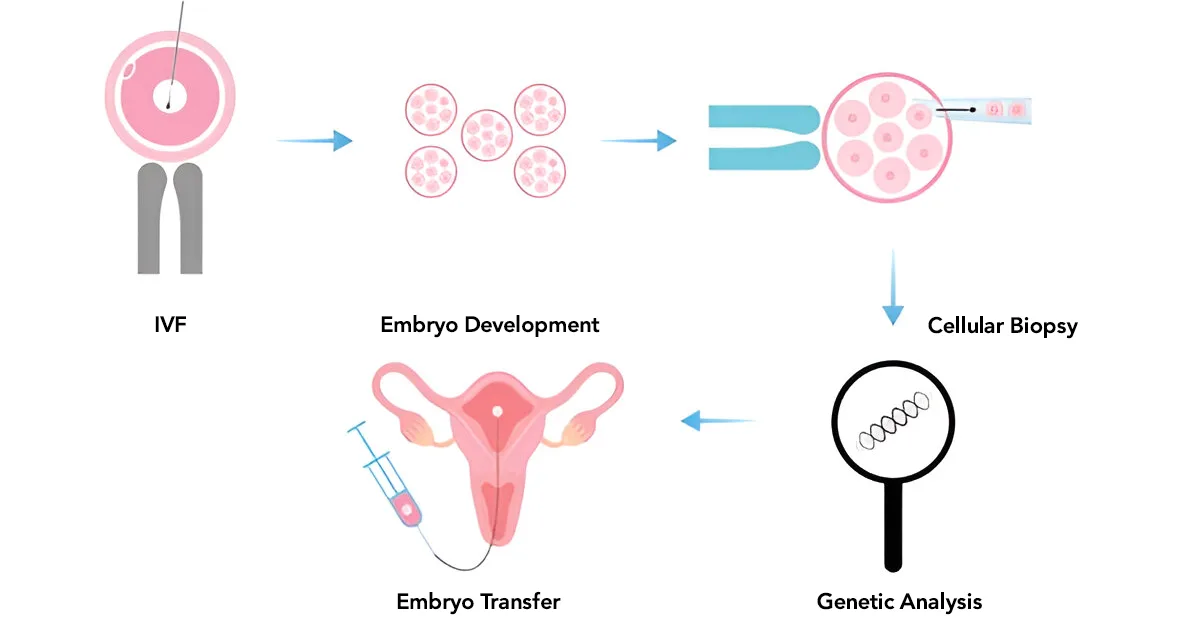
As women age, the proportion of chromosomally abnormal embryos increases. These embryos typically fail to implant or result in early miscarriage. Preimplantation Genetic Diagnosis (PGD/PGT-A) can screen embryos for chromosomal abnormalities before transfer — identifying which embryos are chromosomally normal and therefore most likely to implant successfully.
4. Stimulation Response Issues
Some women are poor responders to standard ovarian stimulation protocols — producing too few follicles. Others are hyper-responders — at risk of Ovarian Hyperstimulation Syndrome (OHSS). In both cases, the stimulation protocol needs to be significantly adjusted for the next cycle.
What Should Happen After a Failed IVF Cycle?
At the best IVF centre in Ahmedabad, a failed cycle triggers a structured, thorough review — not a reflexive recommendation to “try again the same way.”
Dr. Maulik Shah’s post-failure protocol includes:
- Detailed embryology review — examining fertilisation rates, embryo grading at each developmental stage, and freeze/thaw outcomes
- Reassessment of the uterine cavity — hysteroscopy to rule out polyps, fibroids, adhesions, or septum
- Endometrial receptivity assessment — timing the window of implantation more precisely
- Sperm DNA fragmentation testing — if not already done
- Immunological workup — thrombophilia screen, NK cell activity, antiphospholipid antibodies in cases of recurrent implantation failure
- Review of stimulation response — adjusting protocol, doses, and trigger strategy for the next cycle
- Consideration of donor eggs or sperm if the fundamental issue is egg or sperm quality that cannot be improved
This level of investigative rigour is what separates an excellent IVF programme from an average one.
Frozen Embryo Transfer (FET): A Powerful Next Step
If you have frozen embryos remaining from a previous cycle, a Frozen Embryo Transfer (FET) is often the most cost-effective and emotionally manageable next step — without needing to repeat a full stimulation cycle.
FET at Lifeline involves:
- Endometrial preparation — using hormonal medication to prepare the uterine lining for optimal receptivity
- Precise embryo thawing — using advanced vitrification techniques, embryo survival rates at Lifeline are excellent
- Timed embryo transfer — placed into the uterus at the exact moment of peak receptivity
- Post-transfer luteal support — hormonal support to sustain the early pregnancy
Many couples who didn’t achieve pregnancy in their fresh cycle go on to have successful pregnancies through FET. This is a key reason why freezing surplus embryos — through sperm, egg and embryo freezing — is so strategically valuable.
Advanced Options After Multiple IVF Failures
When standard IVF and FET cycles have not resulted in pregnancy after thorough investigation and protocol optimisation, several advanced options exist:
Donor Egg IVF
If egg quality is the confirmed issue — particularly in women over 40 or with premature ovarian insufficiency — donor egg IVF uses eggs from a carefully screened, young donor. Success rates with donor eggs are significantly higher than with autologous (own) eggs in these populations.
PGT-A (Preimplantation Genetic Testing for Aneuploidy)
For couples with recurrent implantation failure or recurrent miscarriage, PGT-A screens all available embryos for chromosomal normalcy before transfer. Only euploid (chromosomally normal) embryos are transferred — dramatically reducing miscarriage risk and improving live birth rates per transfer. Available through PGD at Lifeline.
Surgical Sperm Retrieval for Azoospermia
When no sperm are present in the ejaculate (azoospermia), TESA, PESA, or MicroTESE can surgically retrieve sperm directly from the testis or epididymis. These sperm are then used with ICSI for fertilisation.
Addressing Uterine Factors
- Hysteroscopic polypectomy or myomectomy — to remove intrauterine obstructions
- Lysis of intrauterine adhesions — to restore a healthy uterine cavity
- Laparoscopic salpingectomy — removal of a hydrosalpinx before the next transfer
The Emotional Reality of IVF Failure — and Why It Matters Clinically
Failed cycles are not just medical events — they are emotional crises. Grief, guilt, anger, and a sense of failure are all completely normal responses. The best IVF doctor in Ahmedabad recognises this and creates space for it.
At Lifeline, emotional support is woven into the care model — not as a box-ticking exercise, but as a genuine recognition that psychological resilience directly affects a couple’s ability to continue their fertility journey with hope and clarity.
If you’re still finding your footing after a failed cycle, it can also help to speak with your best gynaecologist in Ahmedabad about hormonal factors — particularly thyroid function, cortisol levels, and vitamin D — that can be optimised before your next attempt.
Low-Cost IVF in Ahmedabad After Failure: Planning Financially
Undergoing multiple IVF cycles is a financial as well as emotional investment. Lifeline IVF helps couples plan their treatment journey financially through:
- Detailed cost breakdowns before every cycle — no hidden charges
- Cycle bundling options — where financially feasible
- Maximising frozen embryo cycles to reduce the cost of repeat stimulation
- Early diagnosis of treatable factors that reduce the need for additional cycles
Low-cost IVF in Ahmedabad at Lifeline means intelligent financial planning — not cutting corners on care.
Conclusion: Don’t Give Up — Choose the Best IVF Doctor in Ahmedabad
A failed IVF cycle is a setback, not a verdict. With the right investigative approach, protocol refinement, and advanced options, the majority of couples who persist with their fertility journey ultimately achieve their goal.
The best IVF doctor in Ahmedabad is one who treats failure as a data point — something to learn from, act on, and build a better plan around. That is Dr. Maulik Shah’s commitment to every couple who walks through Lifeline’s doors.
For a full introduction to IVF treatment, visit our pillar guide on the best IVF treatment in Ahmedabad. And for comprehensive women’s health care beyond fertility, explore our women’s hospital services.
Book Your Post-Failure Consultation at Lifeline IVF
A failed cycle deserves a thorough answer — not a repeat of the same approach.